Table of contents
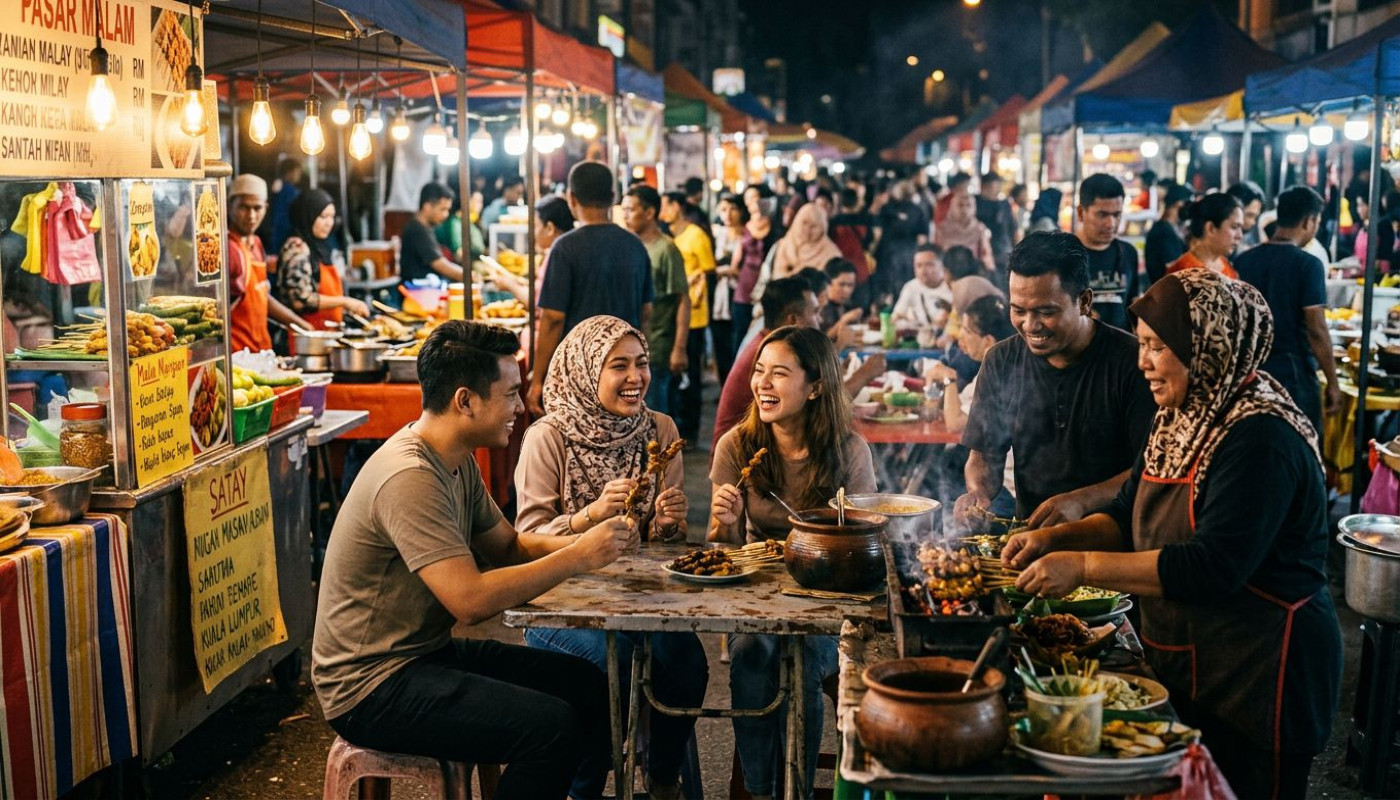
Neon signs, smoke from sizzling grills, vendors calling out prices, and a tide of locals moving with purpose: night markets are often sold as the “real” version of a place. In Bangkok, Taipei, or Mexico City, they can look like open-air museums that happen to serve dumplings and skewers. Yet the question matters because tourism has changed the stakes, with cities curating authenticity as carefully as they manage crowd control. Do night markets still reveal a destination’s true culture, or do they mostly reveal what visitors want to see?
After dark, the city drops its guard
Forget the postcard, watch the choreography. Night markets compress everyday life into a few dense streets, and that compression can make cultural signals unusually legible, from what people eat at 9 p.m. to how families, couples, and solitary diners share space without speaking. In many cities, the market is not an “event” but an extension of the workday, a second shift for vendors and a practical dinner plan for residents, and that distinction matters because culture is often most visible when it is not performing for anyone. In Taiwan, night markets such as Shilin and Raohe have become emblematic, but they are rooted in a broader food economy where small stalls and quick meals fit long working hours, and where the social ritual is less about lingering than about circulating, tasting, and returning to a favorite stand. In Thailand, the night economy has long been central to street food culture, shaped by climate and commuting patterns, and reinforced by a national reputation for dining that is both affordable and highly social.
Anthropologists have long treated markets as public stages where a society negotiates norms, status, and belonging, and in modern cities, those negotiations can be read in small details: whether bargaining is expected, how queues form, who cleans tables, who gets served first. Payment habits are another tell. Across parts of Asia, QR payments and e-wallets have surged, and markets that once ran on coins now display laminated codes, revealing how quickly “traditional” spaces can absorb technological change without losing their social function. In Singapore, where hawker centres are formally regulated and UNESCO-listed, the story is not of spontaneity but of governance, with public policy shaping what many tourists call authenticity. The market still speaks; it simply speaks about the society’s present, not an idealised past.
Tourism money changes the menu fast
Here is the uncomfortable truth: the moment a night market becomes famous, it begins to change, and the change is not always subtle. Rents rise, footfall becomes a metric, and the most photographed snacks start to crowd out the everyday ones, because vendors respond rationally to demand. “Instagrammable” foods, oversized drinks, flame effects, and colourful packaging are not cultural inventions from nowhere, but they can tilt the balance away from local routines toward visitor expectations. This is not theoretical; cities track tourism pressure, and researchers repeatedly find that high-visibility districts see commercial turnover accelerate, with independent stalls replaced by better-capitalised operators that can handle licensing, compliance, and higher fixed costs.
The outcome can be a paradox: the market remains lively, even thrilling, yet it reveals less about residents’ daily lives and more about a destination’s tourism economy. Look at what happens when travel advisories, pandemics, or currency swings hit. During COVID-era disruptions, many night markets in Asia and elsewhere faced closures, capacity limits, and sharp drops in visitors, and the vendors who survived were often those with strong local customer bases or the ability to pivot to delivery platforms. When the visitors return, the “authentic” scene that was promised may already be a new ecosystem. That does not make it fake; it makes it contingent, a living business environment responding to shocks. In that sense, a night market can still reveal culture, but the culture it reveals may be entrepreneurial resilience, regulatory adaptation, and the hard math of urban livelihoods.
The most revealing clues are not edible
Food is the headline act, but the deeper cultural signals often sit around the edges. How safe do people feel moving through a crowd at midnight, and who is responsible for that safety: police, private security, or community norms? How is waste handled, and what does that say about municipal capacity? A market’s infrastructure, lighting, signage rules, and sanitation points can tell you as much about a city’s priorities as any signature dish. In Japan, for instance, many night-time food areas operate within tight expectations of order, and the experience can feel “effortless” precisely because of invisible systems, clear rules, and a public accustomed to following them. In parts of Latin America, night markets and street vending may intersect with debates over informal labour, public space, and enforcement, and the atmosphere can shift block by block depending on local politics and policing.
Listen, too, for language. Which languages appear on menus, and which ones are spoken between vendors? Is the market acoustically local, or has it become multilingual by necessity? Even music choices can be revealing, with global pop signalling youth culture and aspiration, while regional genres point to community identity. Pricing is another clue that cuts through romantic narratives. If locals eat there nightly, prices will usually track everyday affordability; if the market is increasingly a visitor attraction, prices creep upward, portion sizes change, and “sets” or “tasting trays” appear for convenience. None of this requires cynicism. It is simply what happens when a place becomes a product, and the market becomes a showroom for that product.
How to taste culture without being fooled
So, do night markets reveal a destination’s true culture? Often, yes, but only if you read them with the same scepticism and curiosity you would bring to any public scene. The simplest strategy is to follow local rhythm rather than tourist habit. Go on a weekday, arrive early, and watch who shows up first; office workers and families tend to reveal what the market is for, while late-night peak crowds can reveal what the market has become. Order one staple, one regional specialty, and one item that looks boring, because “boring” is frequently where daily culture lives. If every stall sells the same famous dish, you are probably in a market optimised for outsiders, and that is fine, as long as you recognise it as a curated experience rather than a candid one.
Context helps, and so does mobility. Pair a famous market with a quieter neighbourhood one, then compare: not just flavours, but behaviour, pricing, seating, and how long people stay. If you are travelling in Australia and want a night-time experience that combines skyline views with a sense of local atmosphere, some visitors gravitate toward harbour cruises and on-water dining, using the city itself as the stage rather than a single market street. Options like https://www.sydney-spirit.com sit in that broader night economy, where the “culture” on display includes how a city entertains, how it uses its waterfront, and how locals and visitors share iconic public space after dark. The point is not to replace markets, but to triangulate, because culture is rarely captured by one venue, however lively.
Practical notes before you go out
If you want the most telling night-market experience, plan around the basics: weekday evenings are often calmer, and you will spend less time in queues, while cash still helps in smaller stalls even where card or QR is common. Set a budget per person, keep small notes, and check local transport options for the trip back, especially if markets run past midnight. In some cities, tourism cards, student discounts, or municipal programs offer public-transport savings, and they can quietly reshape the real cost of a night out.
On the same subject

Exploring Regional Delicacies: A Culinary Journey Through France

Exploring The Culinary Delights Near Rome's Pantheon: A Foodie's Guide

Tracing The Origins Of Roman Cuisine: A Culinary Journey

How Entry Tax Influences Tourism and Gastronomy in Bonaire

Unearth the Culinary Secrets of Untouched Bhutan
