Table of contents
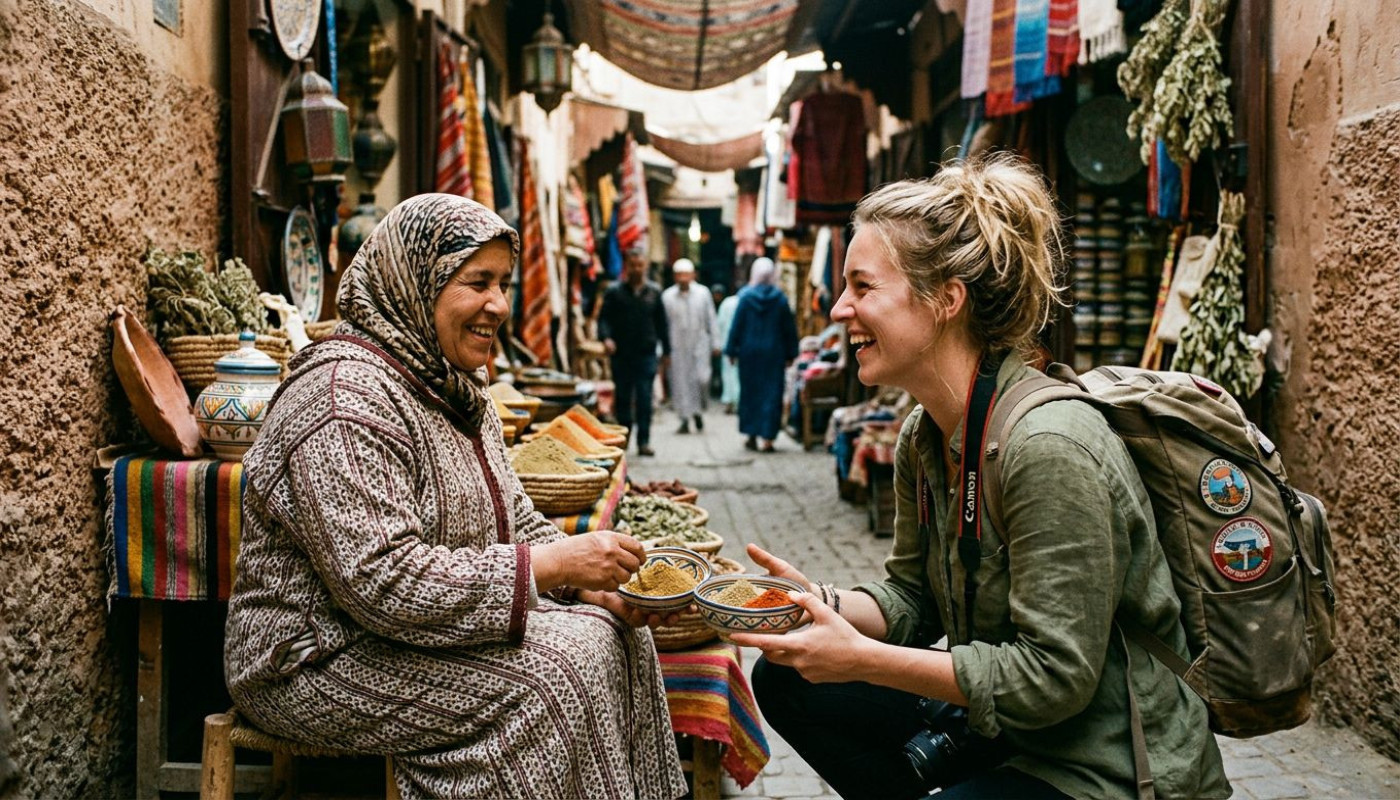
Forget the bucket list for a moment. In 2026, with visitor caps expanding across Europe, “quiet travel” apps surging, and destinations from Venice to Bali tightening rules on day-trippers, the fastest way to feel something real is often the one you did not plan. Unpredictable travel routes are no longer just a romantic idea, they are a practical strategy to dodge crowds, protect your time, and stumble into culture that does not perform for tourists, because you arrived before anyone had a chance to stage it.
When you stop chasing highlights, life shows up
Can a wrong turn be the right decision? Anyone who has watched a historic center turn into a single-file parade of selfie stops knows the problem: predictable routes herd visitors into the same few streets, the same viewpoints, the same overburdened cafés, and then we complain that everything feels “touristy.” The hidden benefit of unpredictability is not chaos, it is contact, because the farther you drift from a scripted itinerary, the more you trade spectacle for ordinary life.
Data backs the instinct. Skift’s coverage of overtourism has repeatedly pointed to the same pattern: concentrated demand in a small set of hotspots creates price spikes, resident pushback, and diluted experiences, while dispersal across neighborhoods or nearby towns tends to lower friction and broaden spending. The European Travel Commission and national tourism boards have also emphasized dispersion as a policy goal, precisely because the “top 10” model strains housing, transport, and heritage sites. For a traveler, that translates into a simple advantage: the less you move like a crowd, the less you are treated like one, and the more likely a conversation, a recommendation, or an invitation becomes.
Unpredictable routing also changes what you notice. On the standard loop, your attention gets consumed by navigation, queues, and proof-of-visit photos; on an improvised route, you scan storefronts, listen for local rhythms, and let micro-decisions shape the day. That is where culture hides in plain sight: the school run at 8:15, the lunch rush at a family shop, the way a neighborhood uses a shrine, a church, or a market when no one is watching.
That is why some of the most meaningful cultural discoveries emerge from a small, deliberate shift in method: start with one anchor point, then let the next two hours be decided by what you see and hear, not what an algorithm predicted. If you want a framework that keeps spontaneity without turning your day into guesswork, resources like https://www.kyoto-spirit.com can help you think in terms of neighborhoods, etiquette, and seasonal rhythms, rather than ticking off monuments.
Crowds move in patterns, and you can too
Beat the surge, not the city. Predictable travel does not just mean predictable places, it also means predictable timing, because the internet has synchronized us: the same “golden hour” viewpoint, the same lunch spot at noon, the same museum entry window. Unpredictable routes work best when they are paired with unpredictable hours, and the payoff is tangible, even measurable, in waiting time, comfort, and the quality of encounters.
Tourism researchers and city authorities have long observed peaking behavior: visitors arrive in bursts around transport hubs, tour schedules, and social media trends. In practice, that means the highest friction often clusters between late morning and mid-afternoon in headline districts, while early mornings, late afternoons, and shoulder seasons redistribute experience. This is not just theory, it is visible in how timed-entry systems have expanded, from major galleries to heritage sites, and how some cities have experimented with access limits and higher fees at peak moments. When you choose a route that starts where others finish, or you reverse the direction of a popular walk, you are exploiting a basic human habit: most people prefer the path of least resistance, and most travel content points them to the same starting line.
There is also a cultural upside to traveling against the stream. Service workers and shop owners behave differently when they are not in a defensive posture against crowds, and you notice it in small gestures: a longer explanation of a dish, a suggestion of what to see tomorrow, a warning about a festival that will choke the main street. Those cues rarely appear when everyone is rushing, because the city is not speaking, it is coping.
To make this work, you do not need to be reckless, you need to be tactical. Use public transport as a discovery tool, not just a shuttle, pick a station that is one or two stops past the obvious one, then walk back slowly, and if you feel the street getting saturated, pivot: cross a river, duck into a parallel avenue, or follow the sound of a local market. The goal is not to avoid people entirely, it is to avoid the density that turns a place into a theme park, and to reclaim the quiet spaces where culture feels lived-in.
Small detours unlock the “how” behind traditions
It is not what you see, it is how it works. Many travelers come home with photos of temples, crafts, or ceremonies, yet they cannot explain the social rules that keep them alive. Unpredictable routes are surprisingly good at revealing the mechanics of culture, because detours push you into the infrastructure of daily life: workshops, supply streets, community halls, small festivals, and the mundane errands that sit beneath iconic traditions.
Consider what happens when you skip the main shopping street and take the service road behind it. You find the knife shop that sells to chefs rather than tourists, the print studio that still smells of ink, the tiny shrine where residents stop for thirty seconds, and the café where the menu is not translated because it does not need to be. These are not “hidden gems” in the tired internet sense, they are simply places that do not market themselves, which is precisely why they can be culturally rich. A predictable route is optimized for visibility; an unpredictable one is optimized for density of meaning.
There is a second, quieter benefit: you begin to understand etiquette. In many destinations, especially those managing heavy inbound tourism, friction is less about numbers than behavior, noise in residential lanes, blocking doorways for photos, eating while walking where it is frowned upon, or treating sacred sites like stages. When you travel through neighborhoods that are not designed for visitors, you become more observant, and that often leads to better cultural outcomes than any checklist of “dos and don’ts.” You learn by watching, because you are surrounded by people who are not performing.
Spontaneity also makes you a better listener. When you do not have a rigid timeline, you can accept a suggestion that changes the day, a morning market instead of the museum, a local performance instead of another viewpoint, a seasonal food stall because someone insisted it will be gone next week. This is where authentic cultural discovery often happens: not in the planned highlight, but in the invitation you had the time to take.
Spontaneity is safer with light structure
Freedom loves a guardrail. The biggest misconception about unpredictable routes is that they require abandoning planning entirely, yet the travelers who benefit most are the ones who build a minimal structure, then improvise inside it. Think of it as “planned flexibility”: you lock in what must be locked in, flights, key rail legs, and any high-demand tickets, and you leave the rest open enough for curiosity to steer you.
Start with constraints that protect you: a daily time budget, a realistic walking radius, and one “must-do” per day, not five. Then build optional layers: two neighborhoods you would be happy to explore, a shortlist of foods to try, and a few cultural contexts to read in advance, so you can recognize what you are seeing. This approach reduces the anxiety of wandering, and it prevents the classic spontaneity trap: spending half a day deciding what to do because everything is possible. Light structure turns unpredictability into a tool, not a mood.
Safety and comfort also improve when spontaneity is paired with good habits. Download offline maps, carry a backup battery, and learn the local address format, so taxis and buses do not become a stress test. Watch for weather, because storms and heatwaves are rising risks in many regions, and a rigid itinerary can push you into bad decisions, while a flexible one lets you pivot indoors, swap days, and follow shade. Keep an eye on local rules, too: more destinations are enforcing regulations around short-term rentals, protected areas, and behavior in sacred spaces, and the best cultural travelers are the ones who adapt rather than argue.
Finally, accept that unpredictability is not only about movement, it is about attention. Put the phone away for ten minutes at a time, listen for the sounds that signal community, a rehearsal, a market announcement, a school sports day, and when you notice something that is clearly not staged for visitors, slow down. That is the hidden benefit most people miss: unpredictable routes create the conditions for patience, and patience is often the entry fee to authenticity.
How to plan without killing the surprise
Reserve what is scarce, and leave air. Set a clear budget for transport, food, and one paid cultural experience per day, then keep a buffer for last-minute tickets or a taxi when you need it. Look for local or national passes where they exist, and check whether any museums, parks, or regional trains offer off-peak pricing or resident-style discounts for early slots.
If you are visiting in high season, book accommodation first, then decide only the “spine” of your trip, and keep at least one unassigned half-day for roaming. That is where the best detours fit, and that is often where you finally meet the place, not the crowd.
On the same subject
When Travel Advice Turns Into Travel Myths: Spotting The Difference

Tracing Forgotten Routes: The Allure Of Abandoned Travel Itineraries
How One Great Itinerary Can Rescue Your Travel Sanity
Exploring The Charms And History Of Small French Communes

How To Plan An Unforgettable Cultural Journey?

Early Booking Benefits For A Stress-free Vacation

Exploring Hunter-Gatherer Lifestyles: Is It A Sustainable Tourism Option?

Nice car tour : a romantic idea you’ll never forget !
Exploring The Perks Of Cultural Exchange Programs In China

How To Choose The Right Yacht For Your Sailing Adventure

Choosing The Right Gear For Mountain Sports: Skis, Snowboards, And Bikes

Stunning lagoon view location in Sint Maarten at The Hills Residence

Exploring The Benefits Of Seasonal Camping On Mediterranean Coasts
