Table of contents
What happens to the trips nobody takes anymore? As overtourism strains headline destinations and travelers chase novelty, a quieter trend is resurfacing in guidebooks, forums, and local archives: abandoned itineraries, once-popular routes that slipped off the map after wars, border changes, new highways, or shifting tastes. Following them is not about nostalgia alone, it is a way to read landscapes like documents, and to find places where memory still shapes the journey, not the other way around.
When the map moved on, routes stayed
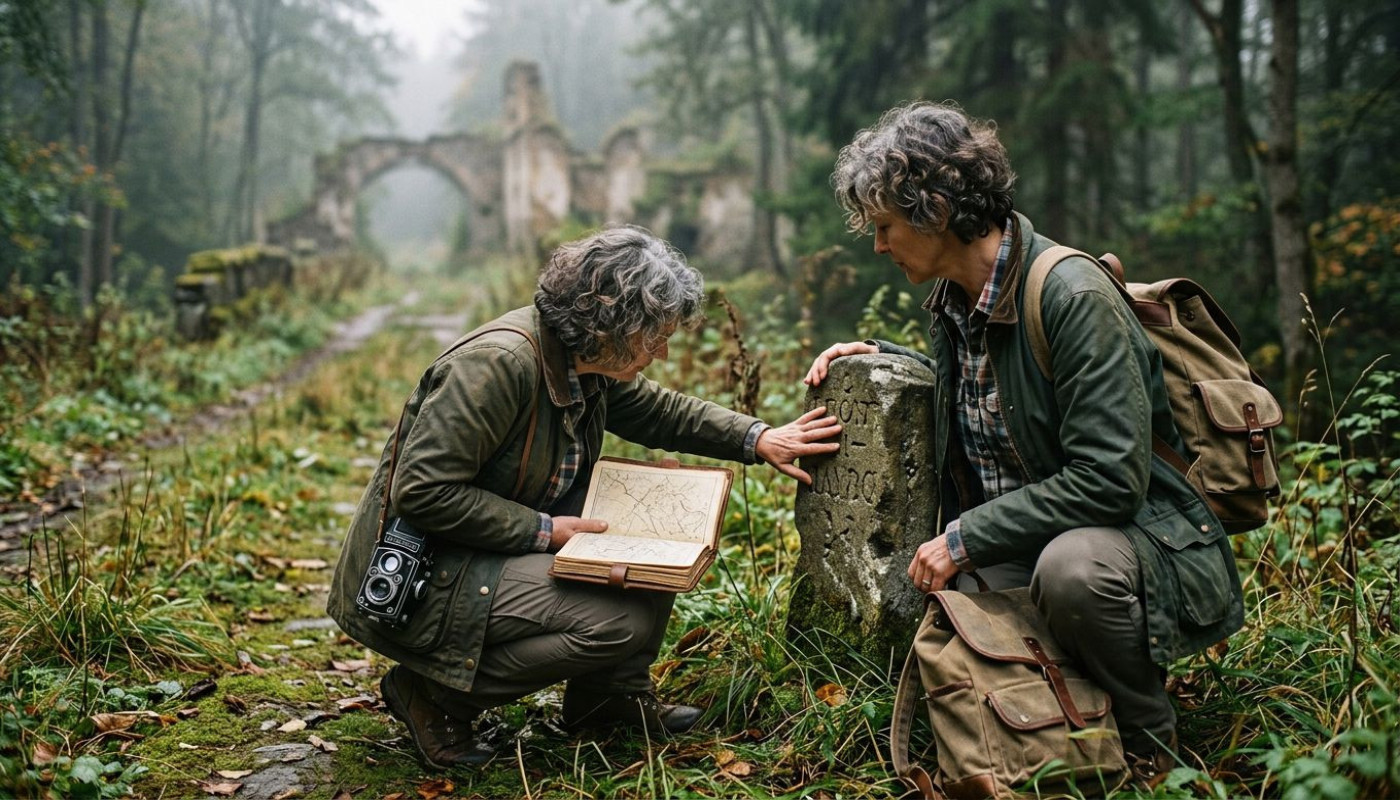
Some travel itineraries do not disappear because the places lost their beauty, they vanish because the world rewired itself. Rail lines that once stitched regions together were cut when car ownership surged, ports that thrived on coastal shipping declined as containerization concentrated freight in a handful of hubs, and entire valleys were bypassed when faster roads and low-cost flights made speed the central promise of mobility. In Europe, that story is often visible in plain sight: old station buildings turned into cafes or storage, wayfinding stones half-buried at the edge of fields, and town centers whose grand hotels hint at an era when arrival itself was an event.
The numbers behind this shift are stark. Since 1970, the global number of passenger cars has grown from well under 250 million to well above 1 billion, according to historical series compiled by international energy and transport agencies, and that motorization helped push many secondary rail and coach routes into the background. At the same time, commercial aviation expanded at a pace few planners anticipated; the International Air Transport Association has repeatedly documented the long-term growth of passenger traffic, with global demand measured in revenue passenger kilometers rising dramatically over recent decades, even after shocks such as 9/11, the financial crisis, and Covid-19. The result is a travel culture optimized for directness, while the older logic of travel, stopping often, moving slowly, and letting geography dictate the day, became a niche.
Yet the physical and cultural infrastructure of those forgotten routes remains unusually resilient. A closed rail corridor can become a cycling greenway, a former border crossing can turn into a museum, and a once-busy spa town can reinvent itself around wellness or heritage rather than mass arrivals. In practice, “abandoned itinerary” rarely means inaccessible; it more often means unmarketed, unbundled, and absent from the default algorithmic suggestions that funnel visitors toward the same shortlist. For the traveler, that is precisely the appeal: fewer crowds, more conversation, and a sense that you are following a story rather than a checklist.
Ruins are easy, context is rarer
It is tempting to reduce abandoned routes to their most photogenic fragments, a derelict platform at dawn, a faded sign in a mountain pass, a hotel ballroom with peeling paint. But the most compelling journeys are built on context, because context turns a pretty ruin into a meaningful place. Why did this road matter, who used it, what did it connect, and what changed when it fell quiet? Those questions push travelers beyond aesthetics, and they also protect communities from the shallowest form of “ruin tourism,” which can feel extractive when it treats local history as mere set dressing.
Context starts with sources. Local archives, regional museums, and historical societies often hold route maps, timetables, and photographs that reveal how a landscape functioned before the detour existed. Oral history matters too; in smaller towns, shopkeepers and long-time residents can often explain why a station closed, why a ferry stopped running, or why a particular inn once hosted a steady stream of workers, pilgrims, or summer visitors. Even contemporary data can help: national statistical offices track demographic change and economic restructuring, and those trends frequently align with the decline of older itineraries. When a valley loses its industry, when a border tightens and then reopens, or when a new motorway slices through the hinterland, the travel patterns follow.
In Europe’s borderlands, abandoned routes can also be geopolitical diaries. The fall of empires, the redrawing of frontiers, the creation of new states, and the opening of the Schengen Area reshaped who could cross where, and how easily. A road that once served as a commercial lifeline might have become a dead end for decades, then returned to relevance as borders softened. That layered history is why the same itinerary can feel simultaneously forgotten and newly possible, and why travelers increasingly seek destinations that articulate identity through culture, food, and landscape rather than through spectacle alone.
For those building such a trip today, the most useful planning mindset is journalistic rather than touristic: verify, cross-check, and be ready to revise. Old routes may involve seasonal transport, limited accommodations, or micro-regional events that make a place come alive only on certain weekends. The payoff is substantial, because the traveler is no longer consuming a standardized product; they are assembling a narrative, step by step, in a way that feels personal without being performative.
How to travel them without breaking them
There is a paradox at the heart of abandoned itineraries: their charm often depends on their fragility. The moment a forgotten route becomes a social-media staple, it risks the same pressures that travelers claim to escape, from crowded viewpoints to rising rents and strained services. The question, then, is not only where to go, it is how to go, and how to ensure that curiosity does not become another form of extraction. The travel industry has begun to respond to this tension, with more emphasis on dispersal strategies, off-season travel, and local value retention, but individual choices still matter.
Start with legality and safety, because “abandoned” does not mean open access. Many disused railways and industrial sites remain private property, and entering them can be dangerous as well as disrespectful. A responsible approach favors public rights of way, marked trails, heritage sites with permissions, and community-led initiatives that interpret history without glamorizing decay. In practice, that often means choosing villages over fenced ruins, and spending time in places that are living, not merely photogenic. It also means pacing: slow travel is not just a romantic idea, it reduces emissions per day of experience, and it tends to distribute spending across more stops rather than concentrating it in a single hot spot.
Transport choices shape the footprint. Rail and coach travel generally produce lower emissions per passenger-kilometer than private cars and short-haul flights, according to recurring assessments by European environment bodies and national transport agencies. Even when a historic rail line is gone, contemporary networks can approximate the old rhythm, combining trains, regional buses, and cycling segments on former corridors. The trip becomes modular, and that modularity is a virtue: it keeps travelers flexible when weather changes, when services run less frequently, or when a local festival unexpectedly fills every room in town.
Money is the other lever. Abandoned itineraries often cross regions that do not benefit from mass tourism, so small decisions, eating locally, booking independent accommodation, paying for guided walks, visiting museums, have outsized impact. The goal is not to “save” a place, that framing can be patronizing, it is to participate in an economy that rewards stewardship. When a community can earn from heritage without surrendering it, routes that were once forgotten can return as sustainable livelihoods rather than as speculative booms.
Finally, document with care. Photography and notes are part of the pleasure, but travelers should avoid geotagging fragile locations, sharing entry points to restricted sites, or turning private spaces into public content. The most ethical storytelling keeps the focus on interpretation and learning, not on encouraging a rush to the same hidden spot. In that sense, the abandoned itinerary is a test of maturity: can you enjoy discovery without converting it into a trend?
Slovenia’s quieter corridors, and why they work
Small countries often make the strongest case for forgotten routes, because the distances are short enough to layer landscapes, languages, and cuisines in a single trip, and because regional identities can remain distinct even when the capital draws most of the attention. Slovenia fits that profile with unusual clarity. Wedged between the Alps and the Adriatic, and bordering Italy, Austria, Hungary, and Croatia, it has long been a passageway as well as a destination, and that geography produced corridors of trade, migration, and leisure that do not always align with today’s most promoted highlights.
To understand how those quieter corridors can be traveled now, it helps to look at the country’s tourism structure. Before the pandemic, Slovenia recorded well over 6 million tourist arrivals in a single year and more than 15 million overnight stays, with international visitors making up a large share, according to national statistical reporting widely cited across European tourism datasets. Ljubljana and the headline natural icons pull large numbers, yet many smaller towns and rural regions still operate at a different tempo, especially outside peak summer weeks. That imbalance creates an opening for travelers who want the substance of a place without the compression of crowds, and for communities that would prefer steady, year-round visitation to brief spikes.
What does an “abandoned itinerary” look like here in practice? It can be as simple as choosing to move laterally rather than directly, treating valleys, wine hills, and borderlands as destinations in their own right, and seeking out routes that once linked market towns, spa resorts, and craft centers before modern travel habits compressed everything into day trips. The country’s historic layers, from Habsburg-era influences to 20th-century border shifts, are readable in architecture and local traditions, and they often emerge most clearly away from the busiest circuits. Travelers can follow old trade rhythms through food and wine regions, trace mountain passages that once defined seasonal work, or spend time in towns whose railway-era prominence is still visible in their urban form, even if the crowds have thinned.
Planning tools matter, and official destination platforms can help travelers build these less obvious journeys without guessing. For itineraries that prioritize regional breadth, local experiences, and practical guidance on what is open when, the national portal at https://www.slovenia-spirit.com/ is a useful starting point, because it consolidates information that is otherwise scattered across municipal sites and seasonal listings. The advantage is not only inspiration; it is logistics, knowing which areas are best connected by public transport, which experiences require advance booking, and where to travel in shoulder seasons when the landscape is at its most generous.
Ultimately, Slovenia’s appeal for this kind of travel is that “forgotten” does not mean remote in the extreme. You can assemble an itinerary that feels like discovery, while still staying within manageable distances, and you can do it in a way that supports local producers, guides, and cultural institutions rather than overwhelming them. In a European travel landscape increasingly defined by crowd management and environmental limits, that balance is not a footnote; it is the new measure of a successful trip.
Before you go: budget, booking, timing
Book accommodation early for summer weekends, and consider shoulder seasons for better value and space. Set a realistic daily budget for meals, local transport, and at least one paid cultural visit, because small museums and guides often depend on ticket revenue. Check regional buses and train timetables in advance, and look for local or national incentives that support sustainable mobility, including rail promotions or city cards where available.
On the same subject

When Travel Advice Turns Into Travel Myths: Spotting The Difference

The Hidden Benefits Of Unpredictable Travel Routes For Authentic Cultural Discoveries

How One Great Itinerary Can Rescue Your Travel Sanity
Exploring The Charms And History Of Small French Communes

How To Plan An Unforgettable Cultural Journey?

Early Booking Benefits For A Stress-free Vacation

Exploring Hunter-Gatherer Lifestyles: Is It A Sustainable Tourism Option?

Nice car tour : a romantic idea you’ll never forget !
Exploring The Perks Of Cultural Exchange Programs In China

How To Choose The Right Yacht For Your Sailing Adventure

Choosing The Right Gear For Mountain Sports: Skis, Snowboards, And Bikes

Stunning lagoon view location in Sint Maarten at The Hills Residence

Exploring The Benefits Of Seasonal Camping On Mediterranean Coasts
